The Auto-Trail Comanche has gone up in the world over the years. It first appeared in the 1980s as a front-lounge, sub-6.0m, Bremen Merc-based coachbuilt. It had a serious growth spurt for the 2009 model year, changed underpinnings, gained an additional rear axle, underwent an interior refresh, and then joined A-T’s premier Frontier Range.
More recently it became the Humberside-based converter’s flagship, and it can be a tempting prospect when you’re looking for the best used motorhomes. Auto-Trail frequently names its models after native American nations, and these are no exception.
Frontiers offered new motorhome buyers the opportunity to personalise their motorhomes. Not only was there a choice of cab colours and of soft furnishing fabrics, but three different overcabs and three different lounge designs were also available.
New buyers could choose between a Super Lo-line streamlined overcab with panoramic rooflight, a Lo-line with overcab lockers, and a Hi-line with a deeper overcab pod containing a transverse double bed.
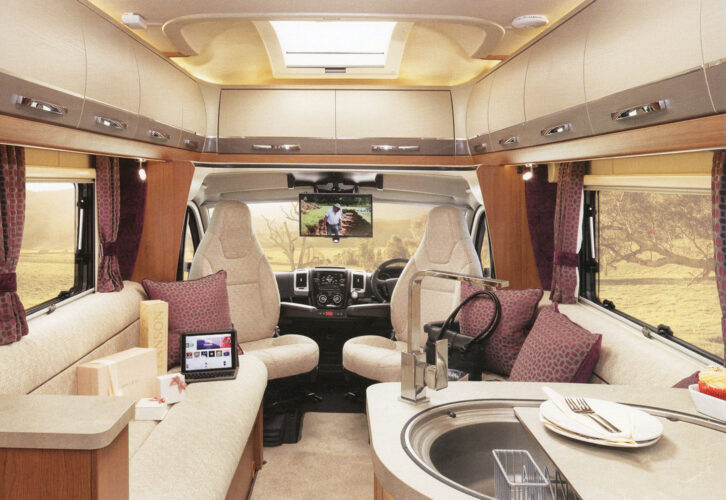
Similarly, there were three lounge layouts available. Standard are two long inward-facing settees. Another two of the motorhome layouts retain the nearside settee, but substitute the offside one with either an L-shaped seat with half-dinette featuring two additional travel seats, or with a double Pullman dinette featuring two or four travel seats.
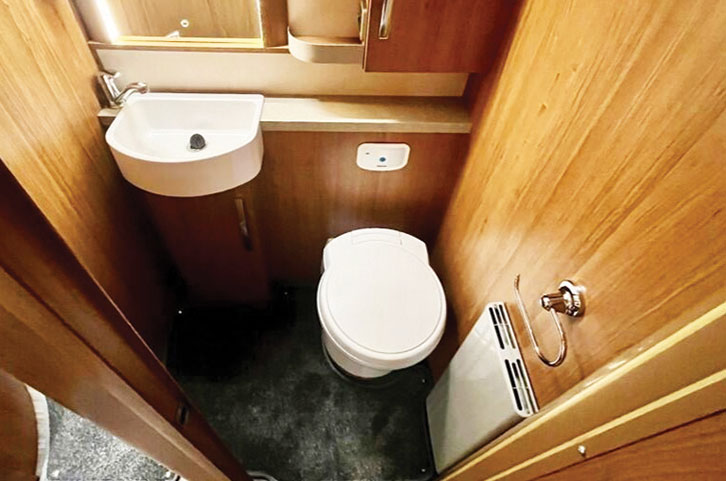
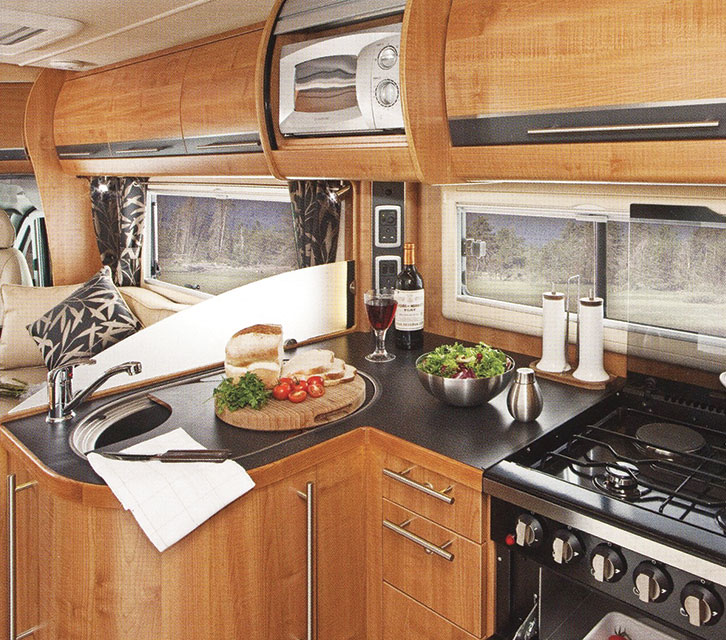
Behind the lounge is a centrally located kitchen. At the far rear is the bedroom containing a (permanent) longitudinal island double bed. Between the bedroom and kitchen is the washroom, including the loo (nearside) and walk-in separate shower compartment (offside). These facilities can be divided from the main saloon and/or be made en-suite to the bedroom.
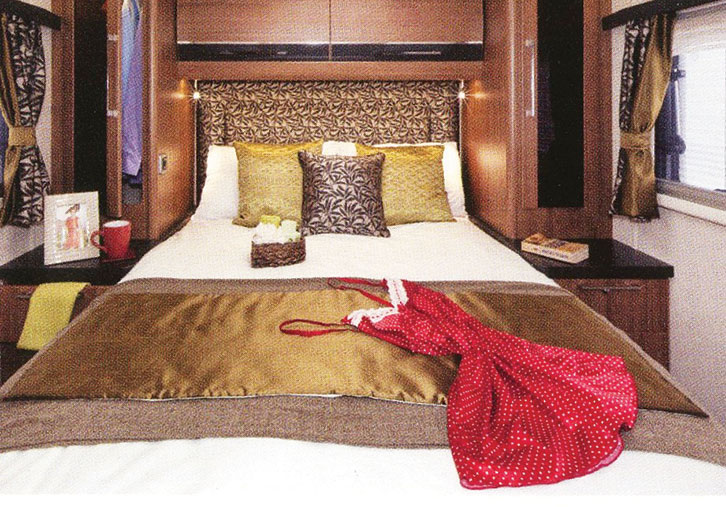
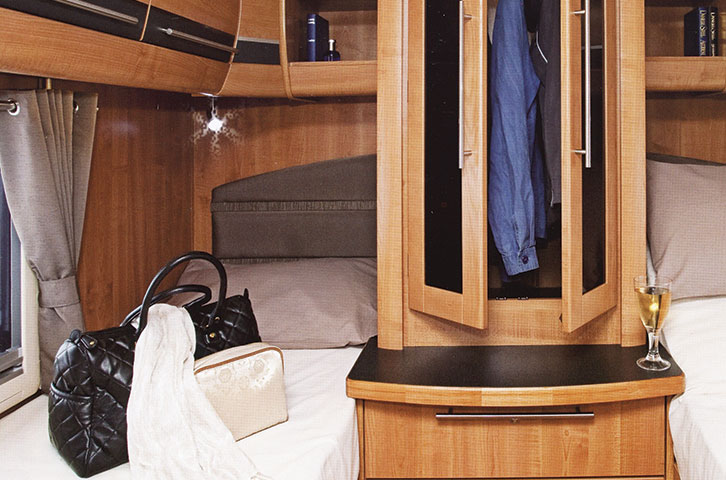
Periodically, Auto-Trail has offered a Comanche S which caters to fans of motorhomes with fixed single beds. Here, the double bed is replaced with two permanent longitudinal single beds, but the rest is unchanged.
Its underpinnings consist of a Fiat Ducato 40 cab with tandem-axle Al-Ko Kober chassis extensions featuring independent torsion-bar rear suspension. Its extra axles offer ‘six appeal’. A more prosaic description of their advantages would include a huge payload, tight and predictable handling, plus increased braking efficiency. At launch, standard motive power was courtesy of the (Iveco-derived) 3.0-litre 157bhp engine driving the front wheels via a manual or ComfortMatic automatic gearbox.
Interior layout was spot-on from the off, which will be good news when buying a used motorhome, and it remains unchanged in current examples. Standard specification was high with Auto-Trail keen to compete against (perceived) luxury European brands. Originally there was an extra-cost Platinum Pack which added metallic silver-grey coloured cab/bumper/spoiler/side skirts and graphite-coloured high-level internal locker doors.
Eventually everything in the Platinum Pack, plus voluminous belly lockers, became part of the standard specification. An (even bigger) upgraded fridge-freezer was introduced for the 2011 model year, plus leather upholstery was added to the options list. 2012 heralded an engine power increase to 177bhp, with Euro 5 emission standard compliance.
A more fluid overcab moulding was unveiled in 2013, although the most significant change was updating the Ducato to the X/290 series in 2015. Euro 6 compliance was achieved in 2017, and 2018 saw a small increase in overall length to 8.77m/28’ 9.25”. Fiat was the last manufacturer at SEVEL to change to AdBlue, required to achieve Euro 6D (final) standard in 2019. Previously they used a twin EGR system.
Comanche ’vans enjoy continuing popularity among those wanting grace and space who judge them to be a ‘long good buy’.
Interested in finding out about a more modern coachbuilt range? Then see what we have to say about the Swift Trekker motorhome line-up, which launched at the start of the 2026 season.
What to look for in a used Auto-Trail Comanche
Base vehicle
A meaningful motorhome test drive should flag-up any mechanical problems, as well as offering a taster of what the driving experience will be. They are not difficult to drive, but do require constant awareness off their considerable length. Sadly, some find out too late that it isn’t for them. A Comanche will be a bit of a Cunarder in a car park, so try to avoid ones with restricted manoeuvring space. Also, don’t cut corners, and allow plenty of time for overtaking manoeuvres.
to upgrade to these from flat ‘lay-on’ doors
The consensus appears to be that the cambelt and ancillaries on later 2.3-litre models should be replaced at 10 years, though more cautious owners replace them at eight. The 3.0-litre derivatives are chain-driven.
Conversion
As with any coachbuilt, the big enemy is damage from water ingress. Check carefully for a musty smell and evidence of staining on the interior wallboard, especially in the vicinity of wall-to-floor and wall-to-roof joints, plus around windows and retro-fit accessories.
Seals can fail over time, no matter how carefully the motorcaravan was assembled at the factory. A recent motorhome habitation service, plus a professional body-integrity inspection with a written report will be reassuring.
Comanches are popular with those on extended tour or spending long periods on the Iberian Peninsula during the winter. A low mileage doesn’t always equate to light use.
Our pick
Buy on condition rather than age. An increasingly important consideration for residents within urban areas that have – or are likely to have – a Low Emission Zone, is exhaust emissions. Euro 6 is the best bet for those looking at long-term ownership.
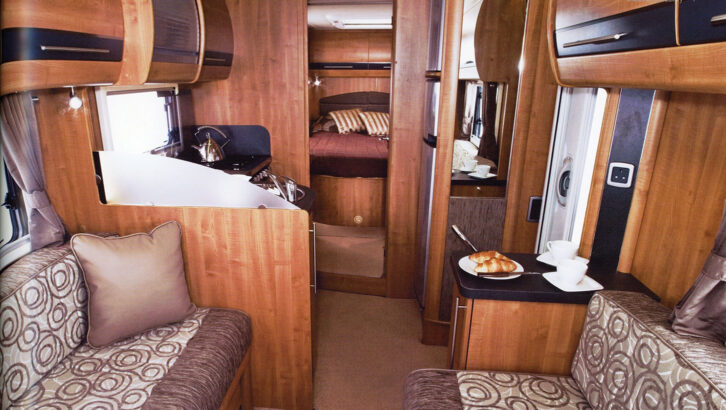
Make sure that the example you are considering has sufficient travel seats in the rear to accommodate everyone. A few have none, most have two, some four.
What to pay
Early examples are occasionally available for sale privately from £33,000, but both private and trade asking prices are usually north of £40,000. Euroway Leisure (Bradford) has a low-mileage automatic 2010 example with the bombproof three-litre engine, for sale with a windscreen price of £39,995.
Current RRP is £126,480 – a huge theoretical ‘saving’ of over £86,000.
Auto-Trail Comanche essentials
- Auto-Trail Comanche on Fiat Ducato 40 Al-Ko Kober tandem rear axle chassis-cab
- This generation was built 2009-present on Europarc, North Lincolnshire, UK
- Low-profile and Luton overcab coachbuilt
- Maximum overall length: 8.77m (28’ 9.25”)
What we like about a used Auto-Trail Comanche
- Roomy layout
- End bedroom
- Spacious comfort station
- Generous exterior-access storage
- Six appeal
What we dislike about a used Auto-Trail Comanche
Interior wallboard and joints look dated
Alternatives to consider
UK coachbuilts on tandem-axle Al-Ko underpinnings. Auto-Trail Arapaho, Chieftain, Grande Frontier GF80 and 88 (A-class). Swift Kon-Tiki (model specific).
Don’t miss what we have to say about the essential motorhome electric checks that you can carry out, either.
If you’ve enjoyed reading this, why not get the latest news, reviews and features delivered direct to your door or inbox every month. Take advantage of our brilliant Practical Motorhome magazine SUBSCRIBERS’ OFFER and SIGN UP TO OUR NEWSLETTER for regular weekly updates on all things motorhome related.
Leave a Reply