The best van for a camper conversion will ensure you have a comfortable base vehicle for making many happy memories. To the uninitiated, the vehicle that your campervan runs on might seem to be of only very limited importance. That’s not perhaps totally surprising: when you first start investigating campervans, you probably want to know more about whether the bed is the right size, whether there’s really room for a shower or how much storage there is.
However, as soon as you start investigating, you should find that the base vehicle is possibly just as important a part of choosing the best campervan as things that may have initially attracted your attention. After all, at one end, a poor base vehicle can turn a pleasant experience into a chore. At the other end, you get the best campervans for everyday use, which offer a driving experience so car-like that you can forget you were driving a longer vehicle.
A good base vehicle can make a huge difference to the resale value of your campervan as well. Spend some time looking at prices for used campervans, and you will soon marvel at how one particular model can still retain a good value even after many years and with many miles on the clock, purely and simply because it is based on a vehicle that commands admiration. Others, meanwhile, languish unwanted on the forecourt largely because the vehicle they run on is known to be bit of a lemon when it comes to being converted.
It’s not just something you will research if you’re thinking of getting a van from the best campervan conversion companies or a manufacturer either. The base vehicle you choose can also make a huge difference if you ever decide to convert your own van into a campervan, too. Light vehicles may look quite similar on the outside, but you soon discover how one has perhaps just a tiny bit more width at the top, which means you can get some extra storage up there. Another might have a fuselage which is much easier to drill into, so you have more options for where to site important piping and wiring. Still another might have the right kind of gear ratio and torque to make your van really nimble on the road.
Base vehicles are continually being updated, however, particularly now when there is so much more emphasis on sustainability and reducing emissions. There is also the thorny issue these days of what completely electric vehicles makes good base vehicles. At the moment, the answer is still probably none of them do. Their range just isn’t good enough for the resulting electric campervans to be a worthwhile vehicle. But manufacturers are clearly working on this, and in the meantime, some have produced perfectly workable hybrid models.
So if you’re looking for the best van for a camper conversion, here follows a comprehensive guide to all the base vehicles that are currently out there and being used for conversions, with all their pros and cons.
The best vans for camper van conversion:
VW Transporter T7
Ford Transit Custom
Fiat Ducato
Peugeot Boxer
Citroën Relay
VW Crafter
Ford Transit
Mercedes Sprinter
Renault Trafic
MAN TGE
The best van for a camper conversion:
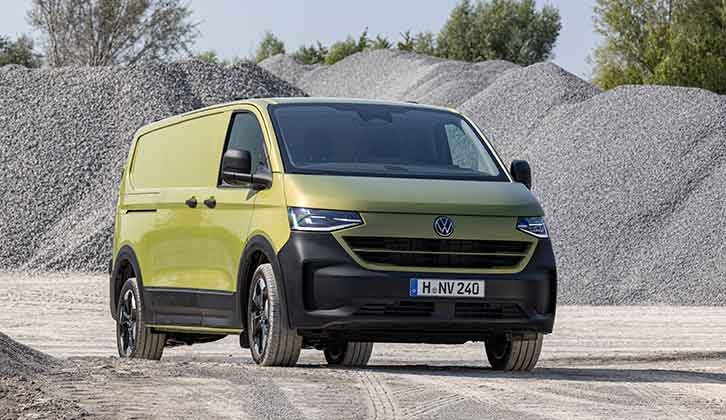
VW Transporter T7
- Length: 5.05/5.45m
- MTPLM: 2800/3025/3225/3350kg
- Engine sizes: 2.0 litre, 110/150/170PS
There’s no getting away from it – the best VW campervan always makes an incredibly iconic sight. The T7, the seventh incarnation of what most people still think of when they hear the word “campervan”, made its way onto many a van converter’s factory floor and dealer court over the course of last year. In total, VW delivered some 125,700 vehicles across the year. That was actually down 15.2% on 2024, but it is still impressive given that the Transporter reached another important milestone last year – its 75th birthday.
The original Transporter, now known as the T1, was actually the brainchild of VW’s then Dutch importer. He saw the need for a relatively affordable light commercial vehicle in a Europe that was still recovering from the Second World War. That first vehicle was just 4.1m long, and came with a split windscreen, hence its “Splittie” nickname.
Over the years, as you would expect, the vehicle has changed quite a bit. The V-shaped split windscreen disappeared when the second generation T2 came out in 1967. It is this vehicle that is possibly most associated with the idea of the hippy campervan. All-wheel drive (first called Syncro, later 4MOTION) was introduced during the reign of the slightly wider T3 in the 1980s, an era which also saw the birth of the California in 1988 (first produced in-house, later by Westfalia, then in-house again).
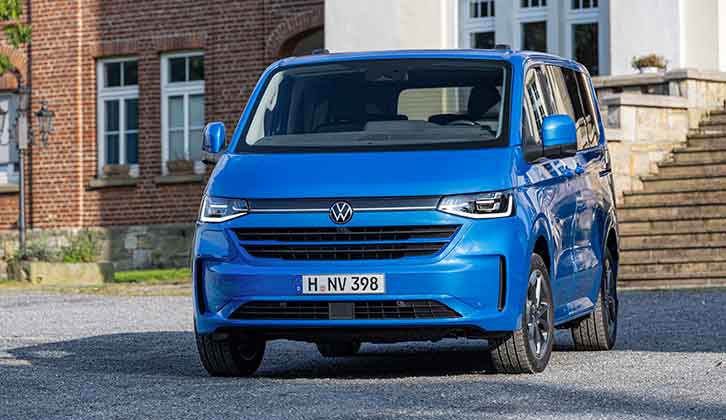
The birth of the T4 in 1990 saw the engine move from the rear of the vehicle to the front, with the first turbodiesel direct injection (TDI) engine introduced in 1996. The Transporter really took on the shape we recognise today when the T5 was launched in 2003, because the T6, launched in 2013, kept thing fairly similar shape-wise but introduced a whole load of new safety features. The sub-generation T6.1, launched in 2019, carried things further with an all-digital dashboard.
Over all that time, however, the Transporter has proved its worth probably because the rules it set way back in the 1950s have still proven useful today. It’s a good, solid but nimble drive, which enhances its use as a day-t0-day vehicle as well as a campervan. That standard layout, with a rear bench seat that flattens into a bed, a pop-up roof, and a side unit containing all the essential services, has proved so reliable that today it is often referred to as a “classic VW layout” even by people who are driving other vehicles.
The Transporter has also been low enough to fit under most car park barriers too, being just 1.99m high. The new T7 continues this tradition. But it is longer than before. Even the short wheelbase version is over 5m, at 5.05m. That could cause more of a problem with some parking spaces. The long wheelbase version is 5.45m long.
And there are other changes too. Because VW uses the term “Transporter” to refer not just to the Transporter itself, but also the people carrier Caravelle model, and the Multivan. And it is the Multivan, slightly shorter than the Transporter and with the advantage of two sliding doors, that VW has chosen to use itself as the base vehicle for the newest California models, such as its VW California Coast. (Which might explain the Multivan’s popularity: while sales overall as we said were down 15.2% in 2025, Multivan sales were up 31.2% to 38,700.)
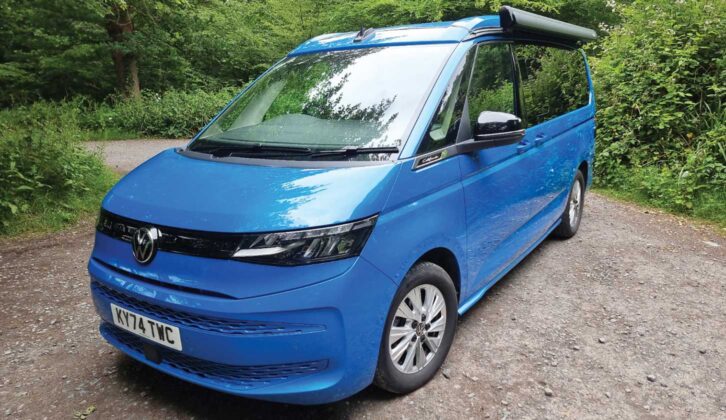
There is the whole electric issue too: in January this year VW launched an all-electric version of the T7, available in three power outputs (136PS. 218PS and 286PS) and with optional 4MOTION All Wheel Drive, with a maximum possible range of 380km. Then there is also the ID Buzz, the first VW commercial vehicle designed from the ground up as an electric vehicle. It saw sales increase by 102% in 2025 to 60,700. Neither of these vehicles have yet inspired a huge batch of independent converters to use them, however.
In recent years, VW has been working ever more closely with its rival Ford to produce light vehicles. The T7 was in fact the first ever Transporter to be so similar to the new Transit Custom that you can use either to produce the same vehicle. This is a flexibility that companies like Redline have taken advantage of, bringing out models that can be based on either vehicle. Future production looks likely to come ever more within Ford’s remit, with vehicles rolling off its production line in Turkey.
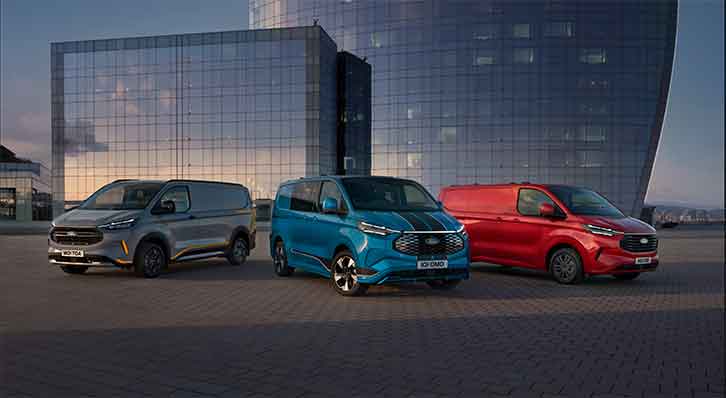
Ford Transit Custom
- Length: 4.97/5.34m
- MTPLM: 3400kg
- Engine: 2.0-litre, 130/150PS
Yes, the van that seems to be the choice vehicle of solo tradespeople up and down the country is also the one vehicle that has really been giving the VW Transporter a run for its money when it comes to base vehicles since its launch in Europe in 2013.
Converters like it because its slightly more boxy style means you potentially have more room for things like lockers near the ceiling – especially in a high top. Most people also love the Custom’s cab, with its very car-like setting particularly when compared with older Fiat Ducatos. The newest Transit Customs also come with a squarish steering wheel that looks surprisingly like what you might have seen on older computer game consoles.
Many people looking at buying a campervan in this market segment will also be looking to use it as a day-to-day vehicle, and that is also why the Transit Custom’s people mover sister vehicle, the slightly higher spec Tourneo Custom, has also proved popular. It offers the option of adding a second row of seats in the rear, taking the total number of passengers up to seven.
The new Tourneo first rolled off the production line in Ford’s factory at Craiova in October 2023 and more recently has been chosen as the base vehicle for the Panama, the Trigano Group’s campervan brand, which includes the Panama P12, the P57. Popular models based on the Transit Custom include the Auto-Sleepers Air.
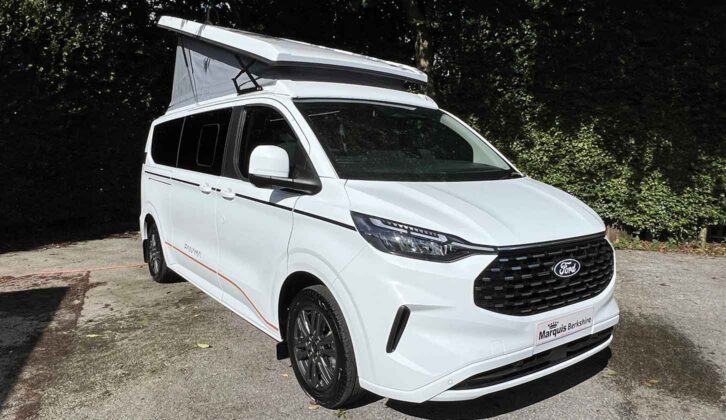
Around the same time, the new Tourneo was launched, the Ford plant in Turkey started production of the new all-electric E-Transit Custom, with an output of either 135PS or 217PS and a range of 236 miles. There already is a PHEV version of the Custom that uses the same 2.5-litre petrol and 65kWh engine you will find in a Ford Kuga SUV. This was used as a based for the Panama P10E, which we named the best campervan for everyday use at our 2026 Awards
As with Volkswagen, Ford produces its own campervan based on a Transit Custom. The Nugget and Nugget Plus, built for Ford by Westfalia, now also comes with a PHEV option as well.
The Transit’s future is likely to be tied up more closely with the future of its arch-rival the VW Transporter. The two companies are now working together on producing light commercial vehicles for the future.
Fiat Ducato
- Length: 5.41/5.99/6.36m
- MTPLM: 3500/4250kg
- Engine sizes: 2.2-litre, 140/180bhp
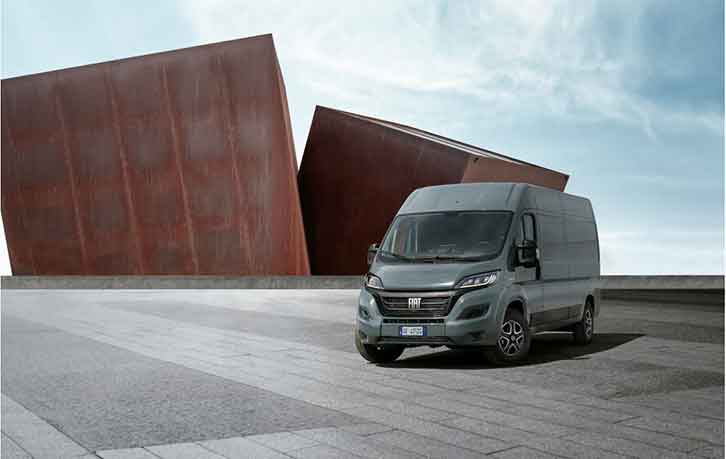
The problems Stellantis was having with the supply of the Fiat Ducato immediately after the pandemic, which for a while threatened to disrupt the vehicle’s hegemony on the motorhome market, seem to be largely behind it now.
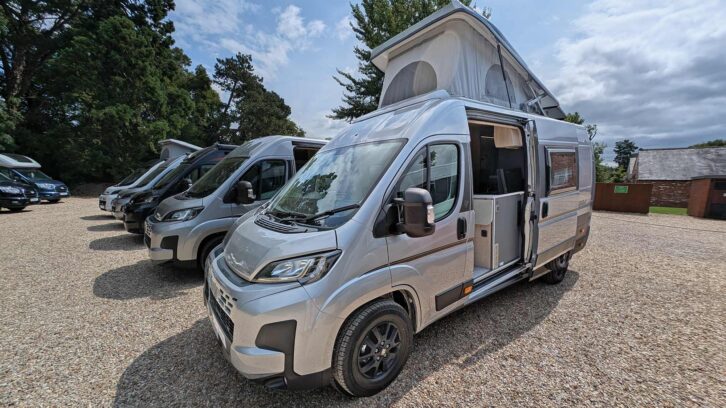
What is perhaps even more surprising is the increased presence Fiat Ducatos have in the campervan market, including vans with rising roofs – an area that has traditionally been dominated by the likes of the Volkswagen Transporter.
In this past year alone, new campervans based on a Ducato with a roof either as standard or an option have included the Malibu Relax, Auto-Sleepers’ Active range, the Auto-Trail Expedition 68XL, and the Carado CV541 Pro, a vehicle that not only has a pop-up roof but even has a solid staircase right up to it.
Four of the eight campervan categories in the 2026 Practical Motorhome Awards were won by Fiat-based vehicles, including our winner of the best small campervan, the Auto-Trail Expedition 54.
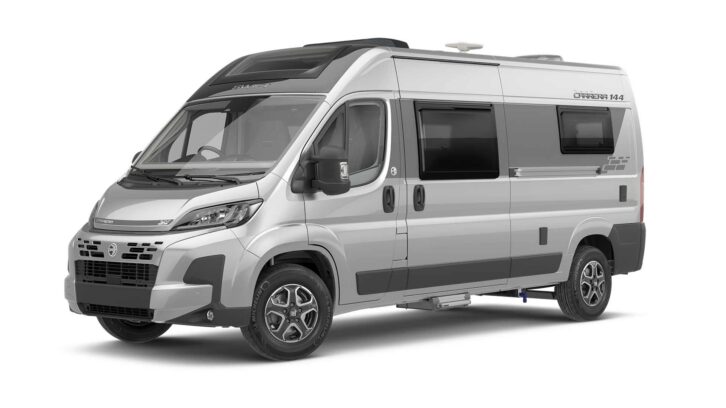
Such a situation would be puzzling to anyone with experience of the commercial vehicle market, where the Fiat Ducato is far from the leading brand (except possibly when you come to ambulances). Clever distribution negotiations Fiat made with several motorhome makers (including Swift) at the end of the last century are really what helped it to build a big lead in motorhomes. Swift also has campervans such as the Carrera 144, which comes on a Fiat.
That, and the fact that over the years, the Ducato has proved itself to be the easiest van to convert. Its square shape makes it easier to work inside, while its relatively clear fuselage (in comparison with other vehicles) makes drilling holes to put in things like water tanks that much easier.
Steering older models of the Ducato used to feel a bit like stirring a witch’s cauldron, but that improved with a new, more car-like design to the cab in 2014. And since then, the automatic gearbox (something Citroën and Peugeot, two other Stellantis brands with vans ripe for conversion, do not regularly offer) has also improved. In 2019, Fiat replaced its old robotised 7-speed Comfort-Matic gearbox with a new fully automatic 9-speed box – more recently changed again to 8-speed.
Further improvements in 2022 mean the vehicle comes with a host of new safety and autonomous driving features. A full electric version of the Ducato was launched as long ago as August 2020, but so far has made little headway in the world of van conversions. Having a maximum range of 192 miles probably does not help, and in any case, Stellantis sees more potential for such vehicles in the home delivery market, where vehicles make relatively short runs and return to the same base each day – so not like motorhomes.
Peugeot Boxer
- Length: 5.41/5.99/6.36m
- MTPLM: 3300/3500/4005kg
- Engine sizes: 2.2 litre, 120/140/165bhp
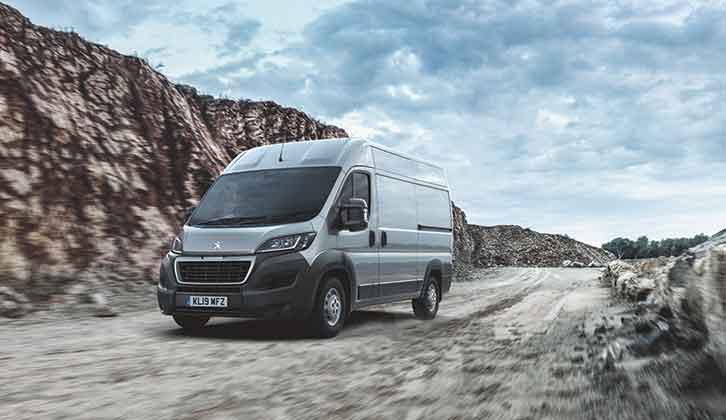
The Peugeot Boxer is often lumped together with the Fiat Ducato and the Citroën Relay as the Sevel Group of vehicles, so called because all three brands were owned by the Sevel Group, a joint venture between Fiat and the PSA Group which became Stellantis in 2021, and all three run down the same production lines at a factory in Atessa in Italy.
The Boxer is possibly the second most popular van for converters of the three, certainly among UK converters. It forms the base vehicle for Bailey’s Autograph range, and for all Erwin Hymer UK low-profiles, although Auto-Sleepers recently switched its low-profiles to Fiat.
The main difference over the Fiat is that with the Peugeot, an automatic gearbox is not really an option. Auto transmission has improved vastly in recent decades, but it has still been slower to catch on in Peugeot’s home market of France, so it isn’t offered. As a result, if you choose a motorhome which is usually based on a Peugeot but you want automatic transmission, you may well find you have to pay extra for a souped-up Fiat engine instead.
Citroën Relay
- Length: 5.41/5.99/6.36m
- MTPLM: 3300/3500/4005kg
- Engine sizes: 2.2-litre, 100/120bhp, and 3.0-litre 160bhp
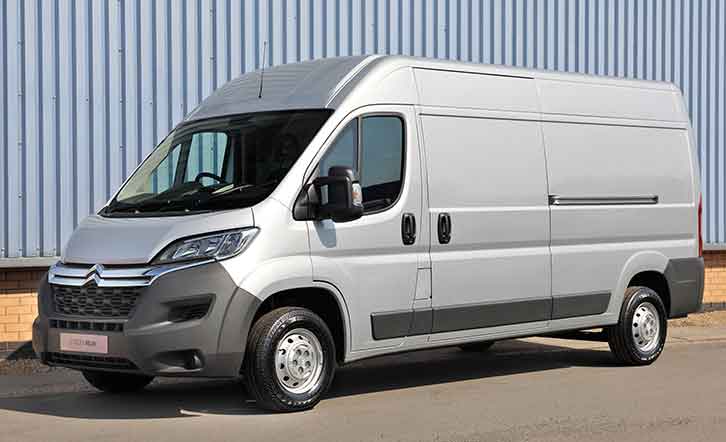
Known as the Citroën Jumper in Europe, the Relay isn’t as popular an option as a base vehicle in this country as the Peugeot Boxer or Fiat Ducato, even though motorhomes based on it frequently come out cheaper. Hobby uses the Citroën as a base vehicle for its cheaper ranges, but Joa by Pilote, which initially used the Relay on models such as the 2023 Joa Camp 60G (back when it was just plain Joa) has dropped it in favour of the Fiat Ducato.
One new development in the past few months has been the arrival on these shores of Citroën’s very own campervan, the Holidays. It is a significantly cheaper rival to the likes of Volkswagen’s California or the Ford Nugget, built for it by Brava Mobil in Slovenia.
VW Crafter
- Length: 5.98/6.84/7.39m
- MTPLM: 3000/3500/5000kg
- Engine: 2.0-litre 140/163/177PS turbodiesel
VW’s larger alternative to the Transporter has been gaining in popularity these past few years.
It is, of course, the base vehicle for VW’s very own Grand California model, such as the VW Grand California 600. But more recently Adria has extended its Compact range to run on Crafters as well, while Hillside Leisure has also been making more Crafter-based models. The vehicle has also been used by Knaus, Dethleffs, and frequently by UK-based IH Motorhomes.
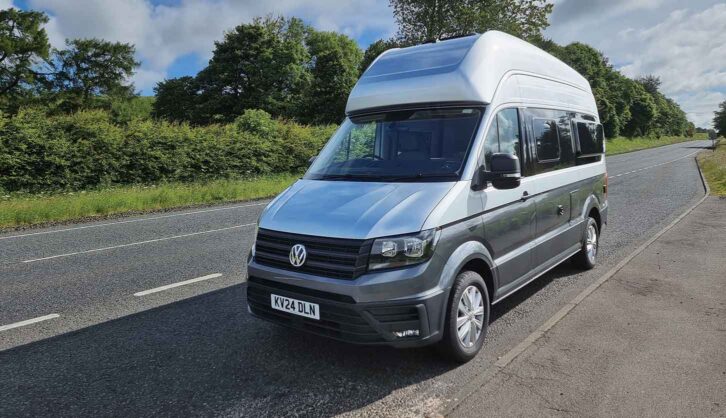
The vehicle was updated in the middle of 2024 too, with a widened range of driver assist and safety features including autonomous emergency braking, lane assist, and acoustic park distance control for the rear area, all of which will help to improve the campervan driving experience.
There’s also a new 10.4in infotainment screen, as well as wireless smartphone charging, and a USB-C connection. The steering wheel has also been revised, as have the electronic handbrake switch and optional automatic gearbox controls.
This is the second-generation Crafter to be built by Volkswagen itself. Although the vehicle was launched in 2006, for its first ten years it was effectively a rebadged Mercedes Sprinter. Then in 2017, Volkswagen redesigned the vehicle and brought production of it in-house.
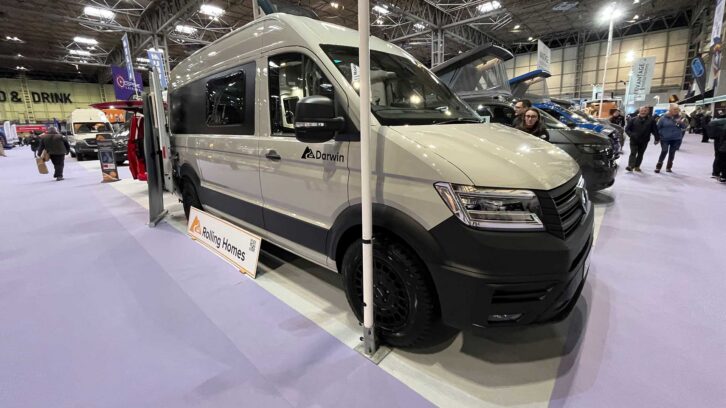
New launches based on the Crafter for 2026 include the Rolling Homes Darwin.
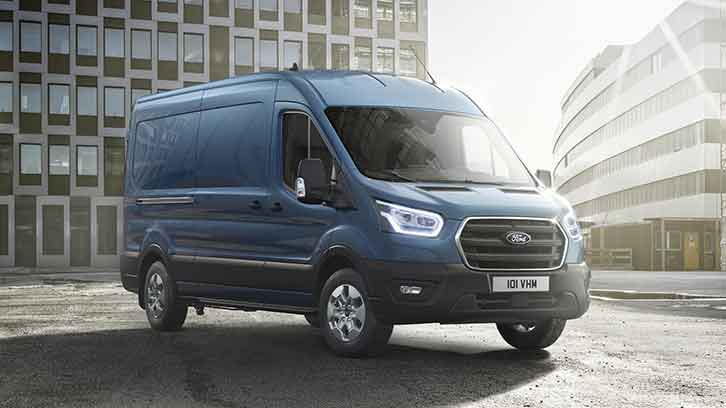
Ford Transit
- Length: 5.53-6.7m
- MTPLM: 2900-3500kg
- Engine: 2.0-litre turbodiesel
In recent years the standard Ford Transit has also benefited from the hiatus at Stellantis earlier this decade, if anything, possibly more than the VW Crafter.
The familiar oval blue badge and familiar low slung side windows on the cab now grace Swift’s Voyager and Trekker range, including the Trekker X, and all Bailey models except the Autograph, including its latest Endeavour models. The Bristol manufacturer worked with Ford directly to bring out the Endeavour range.
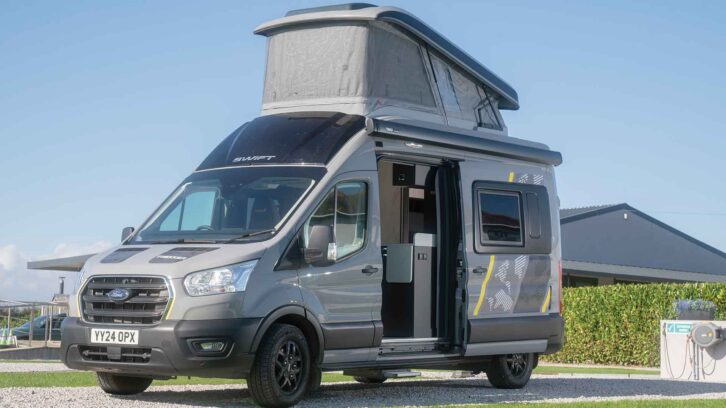
As with its more compact Transit Custom, it’s not difficult to see why the Transit has been such a go-to vehicle. First and foremost it (usually) works out cheaper than the Ducato. It has a more car-like driving position too, and we noted how the Transit-based WildAx Equinox, for instance, could be a good everyday vehicle.
However, opinions on that snout-like front profile and more spongy gears are more divided.
Most recently, it has gained an optional eight-speed automatic gearbox powered by a dial on the dashboard, a lighter chassis with an updated front end and larger 16-inch wheels, and a 12-inch touchscreen in the cab.
An all-electric version of the Transit was launched in 2020, the same year as the all-electric Ducato, and like that vehicle (and unlike the all-electric Transit Custom) it has not really made much headway in van conversions.
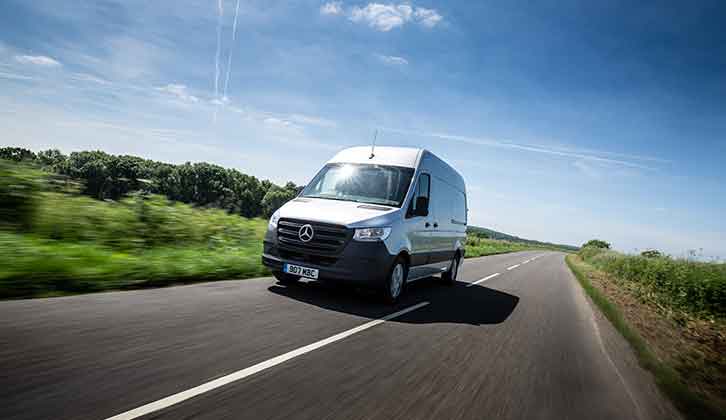
Mercedes Sprinter
- Length: 5.93/6.97/7.37m
- MTPLM: 3500/3880/5000kg
- Engine sizes: 2.0-litre, 150/170/190PS
The Volkswagen Transporter wasn’t the only light commercial vehicle celebrating a birthday last year. The Mercedes Sprinter turned 30, and to celebrate the fact, Mercedes-Benz vans commissioned a survey to show just how much more upmarket its drivers have become in that time, with over half holding degrees, compared with just 12% in 1995.
That may well be, but in all that time that the 3-star badge is still proving a very popular base vehicle for a motorhome – and not just at the very top of the market.
Even if a motorhome with a Mercedes Sprinter base vehicle will still be on average £7,000 more expensive than an equivalent van on a Fiat Ducato, converters have still gone for the brand.
For example, Bürstner has chosen the Sprinter to be the base vehicle for its highly innovative Habiton range, which includes HMX 6.0, our pick for the best 2 berth campervan with shower and toilet at our 2026 Awards.
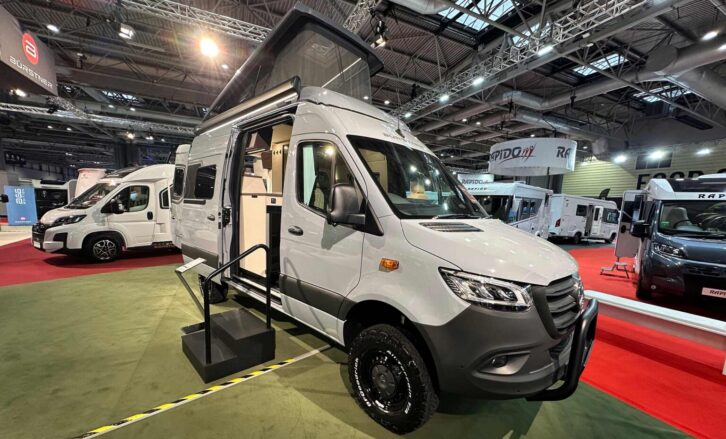
Coachman has also extended its Mercedes-based low-profiles with the Sportivo 565, the first Mercedes-based Coachman to have an MTPLM of 3500kg, which anyone can drive.
Malibu uses it for its Genius range too, which includes the Genius 641 LE, a model which was a winner at our 2025 Awards.
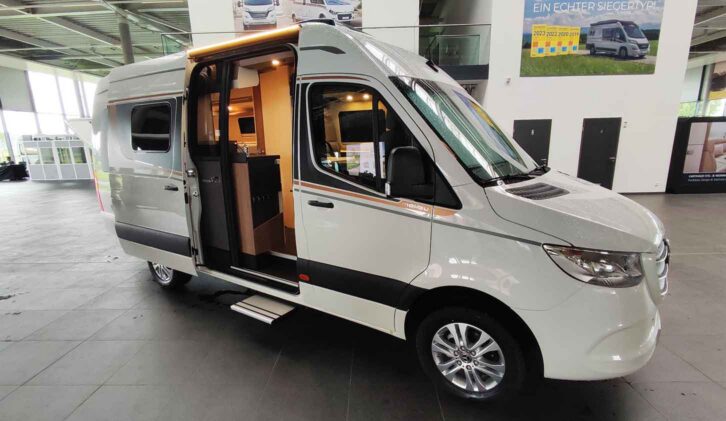
It’s not just the cachet behind the Mercedes name, however, although that can be a serious attraction for recent retirees looking to spend their lump sum. The Sprinter has an enviable reputation for reliability. And, like Fiat and Ford, Mercedes is known for working directly with manufacturers to make a chassis that suits their needs. Hymer’s SLC chassis, which currently graces its B-Class Modern Comfort (BMC) range, was the result of a two-year collaboration between the two companies.
That said, some feel that the taller-than-average body shape of the Sprinter makes for a less satisfactory driving experience. Older versions of the Sprinter in particular – those produced before 2018 – had a bad reputation for road handling, which is possibly why you tend to see older Sprinter-based vehicles languishing on used dealer forecourts for longer, even at a supposedly bargain price.
The third-generation Sprinter, which launched in 2018 and for the first time included a front-wheel drive model in its lineup, has proved more of a hit, in particular the minimalist cab.
The most recent development has been the launch of the eSprinter, available in two battery sizes, with a maximum possible range of 271 miles.
Renault Trafic
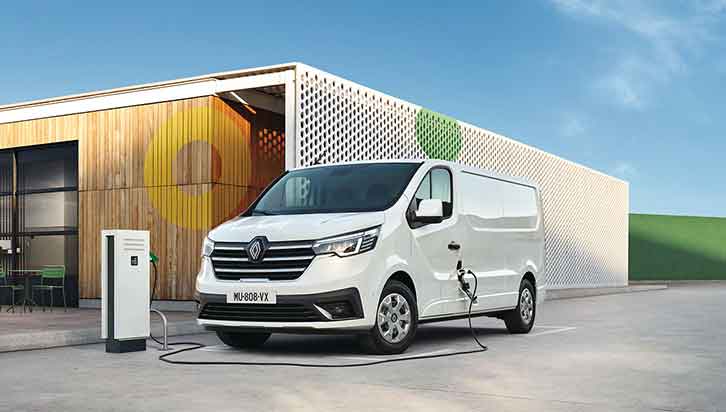
- Length: 5.08/5.48m
- MTPLM: 3010/3070kg
- Engine: 2.0-litre, 150bhp
The Renault Trafic has never really been a top contender in the van conversion stakes, with CMC’s Hembil range one of the relatively few that still features the vehicle in it line-up. But you can probably still find a few Trafic-based vehicles on the used market, because Hillside Leisure has produced Trafic-based vehicles in the past, as briefly, did Adria with the Active Duo.
As with many other brands, there is now the Renault Trafic E-Tech, an all-electric vehicle with a range of 186 miles.
MAN TGE
- Length: 5.99/6.84/7.39m
- MTPLM: 3000/3500/5000/5500kg
- Engine sizes: 2.0, 75/103/120/130kW
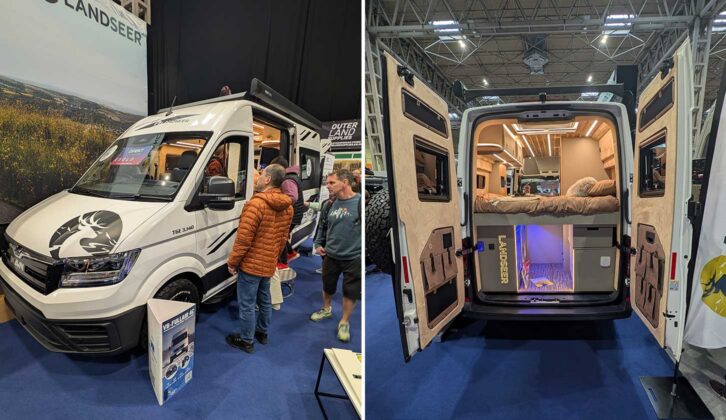
MAN is mainly known for building trucks and lorries, which explains why the MAN TGE is actually a rebadged Mercedes Sprinter with different spec. The vehicle has started to be used more frequently by some larger manufacturers, with Landseer bringing out a MAN TGE-based model at this February’s Caravan, Camping & Motorhome Show.
It was following in the footsteps of other UK converters who can see the attraction of the vehicle. These include WildAx, with its Altair model, and Hillside Leisure, which has produced a version of its Hopton model on MAN TGE.
If you are thinking of converting your own model, be sure to take a look at our guide to the pros and cons of self build campervans first.
How we choose the best vans for camper van conversion
The best vans for camper conversion will offer a safe and reliable setting for touring adventures, as well as impacting features such as the engine size and extras such as the gearbox it comes with. We’re able to pick out the standout options on the market in a couple of ways.
Firstly, we run the Owner Satisfaction Awards, where our readers vote to let us know how they’ve got on with their ‘vans, including the base vehicle and their experience with the converter or the manufacturer. Our 2025 results saw 3,553 readers vote, giving us an in-depth insight into the state of the market and allowing us to pick out the leading converters and the standout vans for converting.
We also run the Practical Motorhome Awards, where our expert judging panel use our combined decades of industry experience to pick out the outstanding options on the market for the upcoming season.
Combine this with the hundreds of real-world reviews of ‘vans that we’ve carried out over the years, and we’re in an authoritative position to compile our best van for camper conversion guide, vehicles that will offer a reliable experience.
What is the most reliable van for camper conversion?
The results of our Owner Satisfaction Awards 2025 saw our readers pick out Volkswagen as the most reliable new van for camper conversion, achieving an impressive score of 92.7% to take the top spot in the Best New Base Vehicle category, retaining its crown from the 2024 Awards. This was closely followed by Mercedes, which achieved a second-place finish with a score of 90.5%, while a total of 86.1% saw Ford take third place.
However, for those looking for a used van for camper conversion, Mercedes came out on top in the Best Pre-owned Base Vehicle category, achieving a score of 87.90%. Volkswagen finished second, with a score of 87.40%, while Toyota came third with a total of 84.60%
See the full results of our 2025 Owner Satisfaction Awards to see how the rest of the base vehicles got on.
If you’ve enjoyed reading this review, why not get the latest news, reviews and features delivered direct to your door or inbox every month. Take advantage of our brilliant Practical Motorhome magazine SUBSCRIBERS’ OFFER and SIGN UP TO OUR NEWSLETTER for regular weekly updates on all things motorhome related.
Leave a Reply