A fair proportion of motorhome owners are keen DIYers, and this is no bad thing.
Reaching for your motorhome tool kit and doing stuff yourself can obviously save money, plus you get a better understanding of your particular motorhome and how its various appliances and facilities work, which is always helpful. Sadly, though, I see quite a lot of DIY work which should have been left to a professional.
A case in point came in last week in the shape of a 36-year-old ’van on a Transit. There were several issues I found on this old girl but a couple of them were very concerning.
First up was the location of the dual leisure batteries, mounted in a sturdy steel frame under the floor just behind the cab on the driver’s side. Nothing wrong there, you might think, except the old access door in the side skirt had been replaced with a sheet of metal pop-riveted in place – not great for motorhome maintenance. Second was how they were wired: big fat cables, probably 35mm2 disappearing off into the living area, but not a fuse in sight!
Further underneath the ’van I was shocked to find a pair of locking pliers attached to the rear brake hose. Apparently it had had some work done on the rear brakes for the MoT 11 months ago – so the rear brakes hadn’t worked for almost a year.
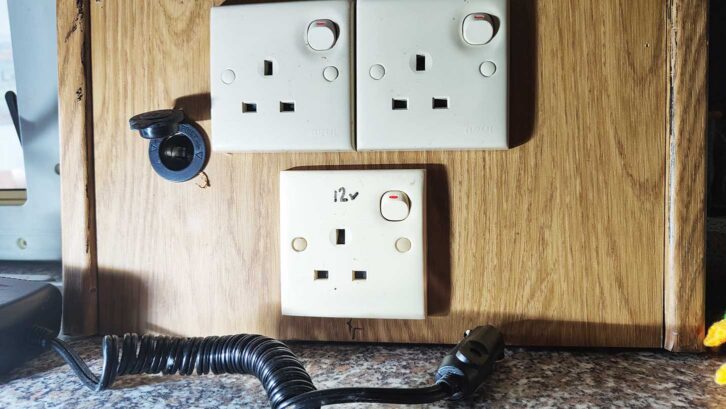
The icing on the cake was inside, where I found three 13A sockets, but one of them labelled as 12V. This is extremely dangerous and thankfully the current owner has disconnected this particular socket.
The real worry is that somewhere there could be a low-voltage device with a 13-amp mains plug on it; if someone plugged it into a correctly wired 230V mains socket that 12V appliance is going to explode – it could at the very least hurt someone, if not maim or even kill them.
Many years ago I saw a someone with a home-converted vehicle, and on the surface he’d made a lovely job of it. Looking under the skin told a different story, though – for starters, 12V appliances were wired with cable that was way too thin for the current it would carry. However, the real concern was how he connected his mains hookup. He had a lead with a blue 16A plug on one end and a standard 13A plug on the other, which went into a socket in a side locker of the vehicle. He often unplugged it from the ’van first, leaving live pins exposed on the ground.
So to you DIYers, I say carry on – but make sure that you know what you’re doing, and always do it in a safe manner.
Something else you could find yourself considering is what type of leisure battery to get for your ‘van. If you’re undecided, see what we have to say about whether it’s worth buying a lithium leisure battery for a motorhome or not.
If you’ve enjoyed reading this article, why not get the latest news, reviews and features delivered direct to your door or inbox every month. Take advantage of our brilliant Practical Motorhome magazine SUBSCRIBERS’ OFFER and SIGN UP TO OUR NEWSLETTER for regular weekly updates on all things motorhome related.
Leave a Reply