Fuel in the UK has never been cheap, but the past few weeks have seen it rise to cost more than it has for a good few years – and it doesn’t look as though it’s going to reduce in price any time soon.
As a result, watching your motorhome fuel consumption has never been more important. Lots of us have tours planned over the Easter weekend, though, so how can you make your trips slightly easier on your pocket? I’m the editor of Practical Motorhome, and here I’m passing on a few tips to help you use less fuel this weekend, and in the weeks to come, leaving you more cash to spend enjoying your trip.
1. Carry less weight onboard
We’ve all been there – stuffing the motorhome’s lockers to the brim (all the while sticking to your payload, of course) with kit that we might need “just in case”. Everything you carry adds weight, which in turn will reduce your fuel economy – take a few minutes to off-load those weighty items that you won’t need this weekend, and it will all help.
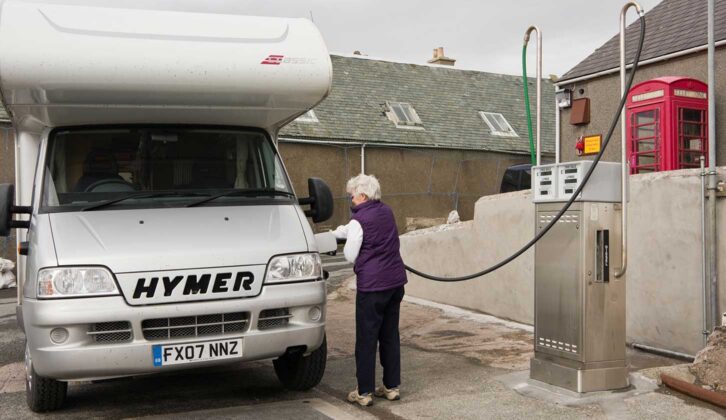
Likewise, leave your water tank with just a few litres of water in it – a full tank could weigh as much as 100kg, depending on the tank’s size, which is the weight of another adult passenger. Fill up when you get to the campsite instead! Make sure your waste tank is empty, too (and if it needs some maintenance, we can talk you through how to clean the waste water tank in a motorhome).
2. Consider your driving style
The more smoothly you drive, the less fuel you’ll use. That means using the accelerator gently, and making sure that you don’t let the revs rise too high (while ensuring that the engine also isn’t labouring). If your motorhome’s base vehicle has an ‘eco’ button, make sure that you press it. If it’s not too warm, you could consider turning the air conditioning off.
Keep an eye on your speed, too. While you’re no doubt keen to get to your destination, dropping your speed (where appropriate) by even just a few mph can make a huge difference when it comes to fuel consumption, and make your journey more relaxing, too.
Take a look at our guide to the motorhome speed limits in the UK
3. Reduce drag
Many of us have motorhome solar panels, satellite dishes and more fitted to our motorhomes, which aren’t removable to help reduce drag. But if there is any opportunity to do so, take it – roof boxes are a good example. If you don’t need it, remove it!
4. Check your tyre pressure
Incorrect motorhome tyre pressures can have a big effect on your fuel consumption, as well as the safety of your vehicle – low pressure increases rolling resistance, and therefore the amount of fuel you’re going to use.
Check the recommended pressures of your motorhome tyres and ensure that they’re inflated correctly.
5. Find the cheapest fuel near you
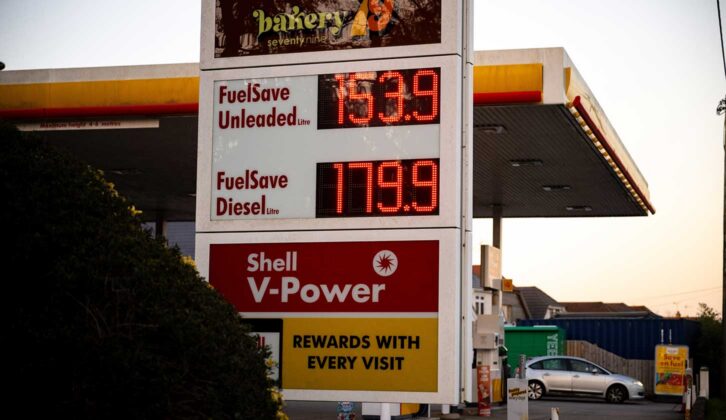
When you’re driving a large vehicle, it’s not always easy to make a detour to find the cheapest fuel – you could end up down narrow roads or end up driving further than you need to, which could cost more in the long run. So think about fuel stops along the way – plan them into your journey and take a break at the same time.
Motorway and large A-road services are always going to cost more than their local equivalent, but a good resource for finding cheaper fuel is a website such as www.petrolprices.com – its app allows you to see prices at a glance. Some navigation apps (such as Waze) also show you the prices of real-time fuel at selected stations – just take care with routing if you’re using an app that doesn’t take into account the fact that you’re driving a motorhome.
Lead image: Getty Images
If you’ve enjoyed reading this, why not get the latest news, reviews and features delivered direct to your door or inbox every month. Take advantage of our brilliant Practical Motorhome magazine SUBSCRIBERS’ OFFER and SIGN UP TO OUR NEWSLETTER for regular weekly updates on all things motorhome related.
Leave a Reply